
North Carolina Banking: A Powerful Economic Force
The economic impact of the North Carolina banking system in 2025

The Banking Footprint in North Carolina
FDIC-Insured Banks
Doing business in North Carolina
Branches
Across the state
Bank Employees
Directly employed by banks
Paid in Federal, State and Local Taxes
By bank employees and banking institutions
Total Economic Impact of North Carolina Banks in 2025
$110 Billion
In total economic output generated across North Carolina — supporting businesses, households and communities throughout the state.
Total Economic Output
Total economic output generated in North Carolina by the banking system and the economic activity it supports.
The Total Impact Includes
Spending Impact
Spending
Created
How Banks Drive North Carolina’s Economy
Banks inject money into North Carolina’s economy in three key ways: through employees’ compensation, operational expenditures and lending activity.
Employees’ Compensation
In annual compensation and benefits paid to 65,000 employees directly employed by banks. As employees spend their earnings, that money continues to circulate through communities across North Carolina.
Operational Expenditures
In direct operational expenditures injected into North Carolina’s economy through spending on technology, legal services, supplies, facilities, utilities, marketing and other business needs.
Lending Activities
Loans help businesses grow, farmers produce and families build homes — fueling economic activity and job creation across North Carolina.
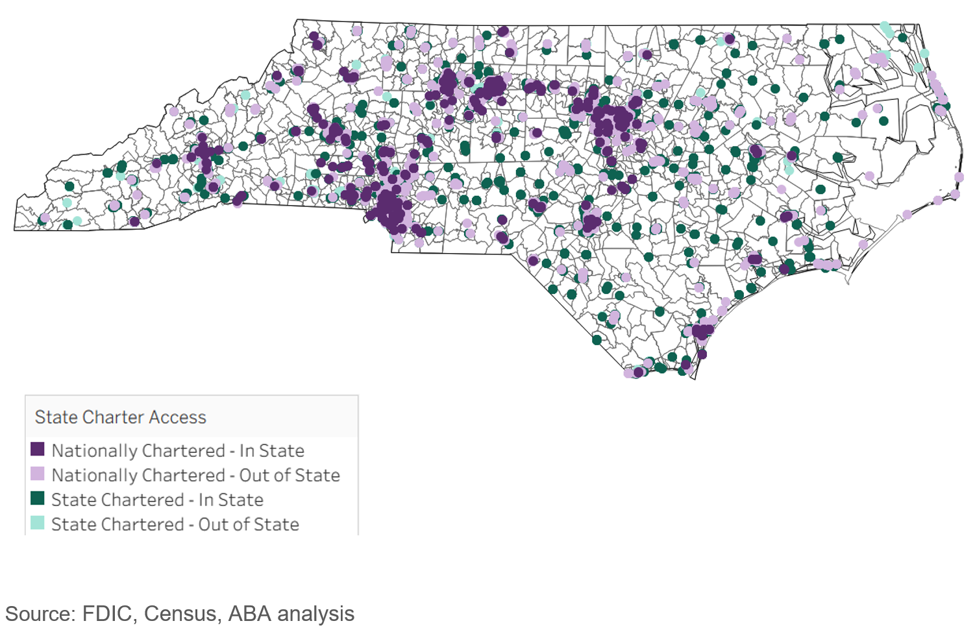
A Statewide Banking Network
North Carolina’s banking system reaches communities across the state through a broad network of banks and local branches.
How the Analysis Works
This analysis measures the economic contribution of North Carolina’s banking system using reported bank data and recognized economic multipliers. It captures direct activity, supply-chain effects and household spending effects across the state.
Bank Activity
The analysis begins with banking activity in North Carolina, including payroll, operational expenditures and selected lending categories.
Economic Modeling
That activity is translated into statewide economic output using regional multipliers that estimate direct, indirect and induced impacts.
Final Impact Measures
The result is reported as total output, value added, earnings and jobs supported across North Carolina.
The analysis draws on bank reporting and economic reference data, including FFIEC Call Reports, FDIC Summary of Deposits data, American Bankers Association information and U.S. Bureau of Economic Analysis RIMS II multipliers.
- Output measures total economic activity generated.
- Value Added reflects contribution to state GDP.
- Earnings capture income generated for households.
- Jobs include full- and part-time employment supported by the activity.
The analysis incorporates direct banking activity along with indirect interindustry effects and induced household-spending effects. Reported values on this page follow the published infographic and report presentation.
Download the Full Economic Impact Report
Explore the full report for additional context, supporting detail, methodology and the complete economic impact analysis of North Carolina’s banking system in 2025.

NCBA gratefully acknowledges the American Bankers Association for its support in compiling this report and highlighting the economic impact of North Carolina’s banking industry.